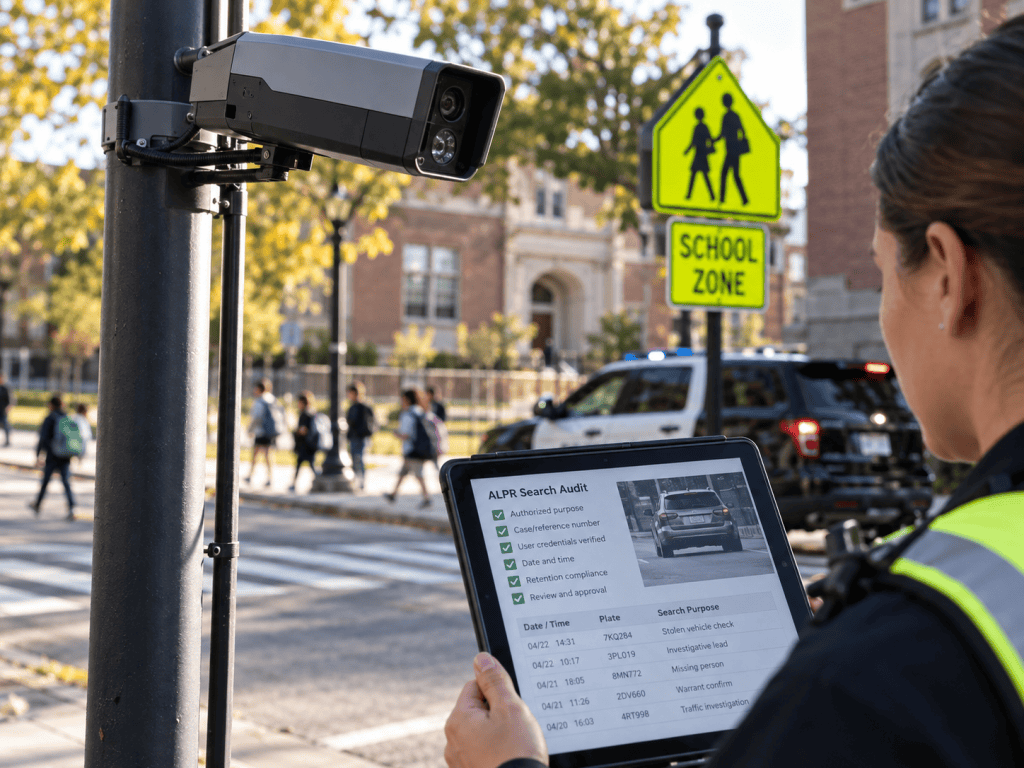
Public-safety agencies have always relied on technology to help officers respond faster, identify suspects and build stronger criminal cases. Radios, computerized records, DNA analysis, body-worn cameras and automated license-plate readers have each changed—and often improved—policing.
The current debate over Flock Safety cameras, however, demonstrates that acquiring a potentially valuable tool is easier than establishing the rules, supervision and public confidence necessary to govern it responsibly.
Automated license-plate readers have demonstrated real investigative value. They can alert officers to stolen vehicles, help locate missing or endangered people, connect vehicles to serious crimes and allow investigators to reconstruct movements that might otherwise remain unknown. Used for a legitimate public-safety purpose, the technology can shorten investigations and help police intervene before another person is harmed.
That value should be acknowledged rather than dismissed.
But an automated license-plate reader is more than a camera taking a photograph on a public street. It is part of a searchable information network capable of collecting, storing and sharing information about vehicle movements.
That changes the oversight question.
The important issues are not limited to where a camera is installed or who purchased it. Public officials must also decide who may search the information, what constitutes an authorized purpose, which outside agencies may have access, how long records are retained, what documentation is required and what happens when someone uses the system improperly.
The CMSD Example
The Cleveland Metropolitan School District offers a timely example.
CMSD operates approximately 200 license-plate readers at 62 school locations and is considering whether to renew a $603,000 contract with Flock Safety. Signal Cleveland reported that an internal district audit found that outside law-enforcement agencies conducted approximately 130,000 searches of CMSD data and accounted for 92 percent of earlier searches.
Those findings do not establish that the technology was misused. They do, however, demonstrate why clear policies and meaningful oversight matter.
A school district may purchase cameras to protect students, employees and school property, yet the information collected can become useful to law-enforcement agencies far beyond the school system. That may serve legitimate public-safety purposes, but those purposes—and the limits placed upon them—should be clearly defined before access is granted.
CMSD administrators maintain that the cameras have assisted investigations involving vehicle thefts, robberies and other crimes around school property. They have also estimated that replacing the readers with a conventional closed-circuit camera system would cost less, but conventional cameras would not automatically identify license plates or connect vehicles with warrants and public-safety alerts.
The Cleveland school board could consider the proposed renewal on October 27.
A Broader Debate Over Access and Accountability
The debate extends well beyond CMSD.
Cleveland’s Community Police Commission voted in September to call for a pause in the Division of Police’s use of automated license-plate readers beginning January 1 unless a revised policy is completed with community input.
Police Chief Dorothy Todd has opposed suspending the technology, emphasizing its investigative importance while supporting accountability for its use.
Meanwhile, Ohio lawmakers and law-enforcement organizations are considering statewide standards and penalties for unauthorized use.
The Standard Should Be Clear
This debate should not be reduced to a choice between supporting the police and protecting privacy.
Effective public-safety leadership requires both operational capability and enforceable limits.
Before renewing or expanding any surveillance system, a public agency should establish a written use policy, restrict searches to clearly defined public-safety purposes, limit access to specifically authorized personnel, establish a fixed retention period, automatically log every search, require regular supervisory review, impose meaningful discipline for unauthorized use and periodically report how the system is being used and what results it is producing.
Those requirements should not exist merely on paper.
They should be incorporated into training and supported by routine supervision. Audits should not begin only after a controversy develops. Supervisors should review unusual search patterns. Access should be promptly removed when an employee changes assignments or no longer has a legitimate need for the system. Deliberate misuse should carry meaningful consequences.
Public reporting also should distinguish between activity and effectiveness.
The number of searches conducted tells only part of the story. The public should also know whether the technology helped recover stolen vehicles, locate missing people, support arrests, identify suspects or solve serious crimes.
That is how public agencies demonstrate value while preserving accountability.
Technology Must Earn Public Trust
Police technology ultimately succeeds only when it produces lawful results that the community can trust.
Automated license-plate readers may have an appropriate and important place in modern policing. But public confidence cannot depend solely on a vendor’s assurances, an agency’s good intentions or the usefulness of the technology itself.
Trust must rest on transparent rules, restricted access, documented searches, meaningful audits, measurable results and leaders willing to be held accountable for how the technology is used.
Martin L. (Marty) Flask
Retired Cleveland Chief of Police
Former Director of Public Safety and Executive Assistant to the Mayor


Leave a Reply